Holmes Beach After Dark: What Sea Turtle Season Is Really Asking of Locals This Summer
July 16, 2026
July 16, 2026
Sea turtle season has always asked Holmes Beach to go a little darker after sunset. In 2026, that familiar request carries more weight.
Hurricanes Helene and Milton damaged dunes and vegetation that once helped block artificial light from reaching the sand. A porch light, television or parking-area fixture that seemed harmless before the storms may now be visible from the beach.
That is the change locals need to understand this summer. Following the usual routine may no longer be enough. Homes and businesses need a fresh look from the turtles’ point of view.
The official Holmes Beach sea turtle nesting season runs from May 1 through October 31. Anna Maria Island Turtle Watch and Shorebird Monitoring began daily patrols on April 15 for its 43rd season because nesting activity can begin before the official start date.
By mid-July, the nightly assignment is clear: keep the beach dark, flat and open while checking whether storm-related changes have exposed new sources of light.
Dunes and coastal vegetation do more than shape the edge of the beach. They can also screen homes, roads and businesses from nesting habitat.
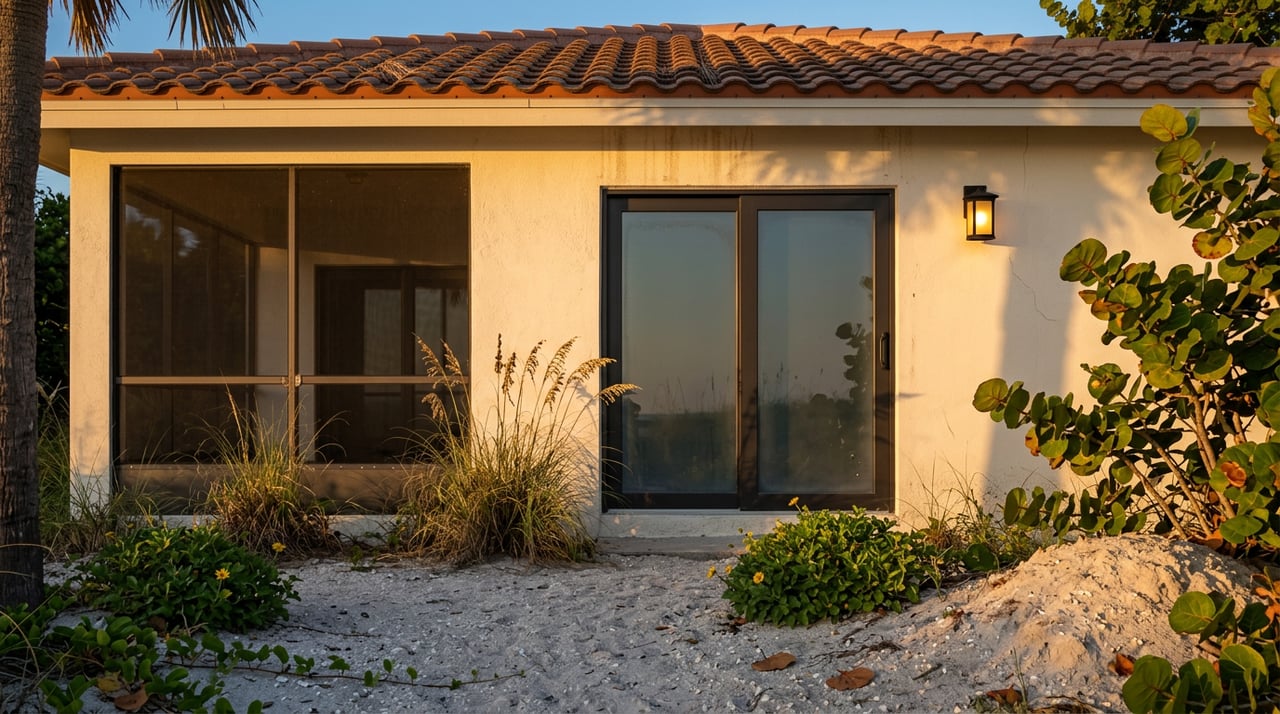
When that natural barrier is reduced, light can reach farther. Interior lamps, televisions, stairwells, garages and exterior fixtures can become visible at turtle eye level even when no bulb points directly toward the Gulf.
The scale of the issue became clear during the 2025 season. AMITW documented 544 nests, 424 hatched nests and 30,899 hatchlings. Those are encouraging outcomes, but the same season also produced 181 documented disorientation events.
Those incidents included 30 adult disorientations and 151 involving hatching nests. AMITW estimated that at least 3,951 hatchlings, and possibly more than 9,000, became disoriented. More than 400 live hatchlings were recovered from swimming pools and storm drains, and 217 were found dead.
Local conservation work is producing hatchlings. Artificial light remains a preventable point of failure.
The practical test is simple: If you can see a light or glow while standing near the water and looking back toward the property, a sea turtle may be able to see it too.
That standard comes directly from AMITW’s local lighting guidance. It is more useful than deciding whether a light seems bright from a porch or balcony.
As of July 3, 2026, AMITW had documented 344 nests across Anna Maria Island. All were loggerhead nests. The organization was still awaiting the first hatch of the season at that point.
Sea turtle eggs incubate for about two months, so the middle of summer marks a handoff. Adult turtles may still come ashore to nest while hatchlings from earlier nests begin emerging at night.
That overlap raises the stakes for lighting and beach obstacles. A chair or deep hole can interfere with an adult moving up the beach. The same obstacle can trap a much smaller hatchling attempting to reach the Gulf.
The activity is spread across familiar local shorelines. Around July 4, Manatee County staff alerted AMITW to the season’s first bayside nest near the South Coquina Boat Ramp. The nest was posted, caged to reduce raccoon predation and added to daily monitoring even though it was outside the group’s typical patrol area.
Loggerhead Krysta also returned to the Gulf at Coquina Beach on June 29 after receiving a satellite tracker. She is Anna Maria Island’s 2026 entry in the Sea Turtle Conservancy’s Tour de Turtles.
These stories show how active the season is. They also explain why nighttime habits in Holmes Beach matter well beyond a marked nest.
Holmes Beach’s Sea Turtle Friendly District is not restricted to beachfront parcels. It includes properties that may directly, indirectly or cumulatively illuminate the beach.
The city’s requirements address more than exterior bulbs. They cover balconies, stairwells, elevators, parking garages, courtyards and light escaping through windows and doors. Exterior lighting must use long-wavelength light and proper shielding. Balcony lights on seaward and shore-perpendicular sides must remain off at night during nesting season.
A useful household audit looks like this:
Interior lighting deserves particular attention in Holmes Beach. Local code staff have previously identified televisions, lamps and open blinds as recurring sources of light, especially where occupancy changes frequently. A turtle-friendly exterior fixture cannot offset a bright room shining through an uncovered window.
One of the easiest mistakes this summer is assuming that any red flashlight is safe around turtles.
AMITW advises against using flashlights or cellphone lights of any color on the beach at night. That includes red handheld lights.
Red or amber long-wavelength lighting is intended for necessary property illumination when the bulb and fixture meet the appropriate standards. The light must still be mounted low, properly shielded and kept from illuminating the beach.
Color alone does not make a light turtle-friendly. Placement, fixture design, shielding and visibility from the sand all matter.
This distinction gives Holmes Beach residents a clearer rule:
The lighting check is only half of the nightly routine. Nesting females and hatchlings also need an open path across the sand.
Before leaving the beach for the evening:
This reset matters at busy access points such as Manatee Public Beach at 4000 Gulf Drive, but the responsibility applies along the full shoreline. Local reporting has documented code staff checking lighting, filling holes and coordinating beach maintenance in the blocks around Manatee Public Beach. The public’s end-of-day cleanup reduces the number of hazards left for staff and AMITW volunteers to address.
Trash creates a second problem because food scraps can attract predators. Fishing line and other debris can also entangle turtles and coastal wildlife.
The goal is a beach that is dark, flat and clear by sunset.
Seeing a nesting loggerhead or emerging hatchlings can stop an evening walk in its tracks. The best response is usually restraint.
FWC recommends staying more than 50 feet away. Remain quiet, stay behind the turtle and keep every light off.
Do not touch, crowd or stand in front of her. Avoid flash photography and illuminated video. Disturbance can cause a nesting female to return to the water without laying eggs, which is known as a false crawl.
Watch from a distance and let them crawl to the water without assistance. Keep lights off and do not pick them up.
Hatchlings use the brighter, open horizon over the water to orient toward the Gulf. Artificial light on the landward side can reverse that natural contrast and pull them toward streets, buildings, pools and storm drains.
A hatchling found in a road, swimming pool or another dangerous location requires a different response. AMITW advises removing it from the immediate hazard, placing it in a dry container with optional sand and no water, and calling the organization for instructions.
Do not release the hatchling independently. It may be injured or unable to swim safely.
For local assistance, call the AMITW 24-hour hotline at 941-301-8434. Sick, injured, entangled, dead or harassed turtles and nest disturbances can also be reported to FWC at 888-404-FWCC, or 3922.
If a persistent property light is visible from the beach, FWC currently lists Holmes Beach Code Enforcement at 941-518-9488 and [email protected] for turtle-lighting reports.
Residents who want a closer look at local monitoring can also attend AMITW’s free Turtle Tracks & Shorebird Facts program. Sessions begin at 10 a.m. Mondays at Holmes Beach City Hall, 5801 Marina Drive. Posted remaining dates for summer 2026 include July 20, July 27 and every Monday in August. No reservation is required.
The sessions offer a practical way to learn what AMITW patrol teams see each morning and how ordinary nighttime decisions affect nesting wildlife.
Sea turtle season in 2026 is not asking residents to give up the beach after sunset. It is asking us to reassess what the beach can see.
Storm damage changed the screening between buildings and nesting habitat. That makes yesterday’s lighting setup an unreliable guide for tonight. A fresh waterline check, closed blinds and a cleared stretch of sand can correct problems before they turn into disorientations.
The routine is straightforward:
Caring for a Holmes Beach property often comes down to details that are easy to miss until conditions change. Christine brings that same responsive, detail-focused approach to helping Suncoast homeowners understand their options and plan their next move.
Ready for a clear starting point? Get Your Instant Home Valuation.
Stay up to date on the latest real estate trends.
Real Estate
Real Estate

Real Estate
Real Estate

Get assistance in determining current property value, crafting a competitive offer, writing and negotiating a contract, and much more. Contact me today.