Why St. Petersburg's Cheapest Condo HOA Fees Might Be Its Riskiest Deals in 2026
August 13, 2026
August 13, 2026
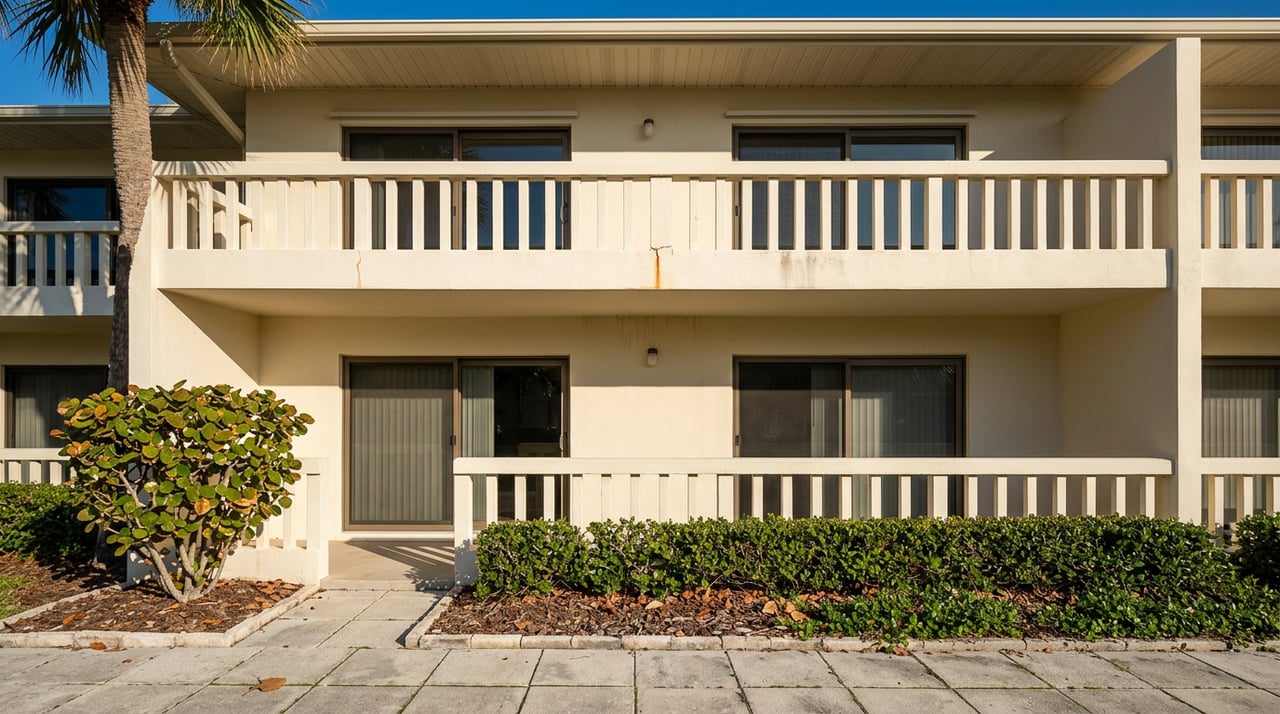
Two condo buildings sit a few blocks apart in downtown St. Petersburg. Same construction era, same square footage, same partial bay view from the upper floors. One buyer closes on a standard 30-year conventional loan without incident. The other, shopping the building next door, gets turned down by three lenders before a mortgage broker explains that the problem isn't her credit or her down payment. It's the building. Same era, same view, and a financing outcome that has nothing to do with either unit's condition.
The difference lives in two documents most buyers never used to ask for: a Structural Integrity Reserve Study, known as a SIRS, and a milestone inspection report. In 2026, those files decide more about a St. Petersburg condo purchase than the age of the roof or the size of the lanai.
Fannie Mae keeps a list of condo projects it won't back with conventional financing, and as of a Tampa Bay-focused industry report published in May 2026, more than 1,400 Florida buildings were on it. A building lands on that restricted list for reasons that have nothing to do with curb appeal: a missed milestone inspection deadline, an incomplete SIRS, a reserve fund that falls short of the new funding minimums, master insurance coverage that doesn't meet current standards, or a pending special assessment large enough to affect the association's finances. Fannie Mae tightened its lender guidance again in early 2026, which means the list of reasons a building can fail this test only got longer.
A buyer whose target building sits on that list doesn't lose the ability to buy. They lose access to the loan most people assume they'll get. The fallback options, a portfolio loan, a non-QM product, or jumbo financing, typically come at a higher rate and a different set of qualification rules. That's the friction nobody mentions during a showing.
The origin point is the 2021 collapse of Champlain Towers South in Surfside, which killed 98 people and forced the Florida Legislature's hand. Governor Ron DeSantis signed Senate Bill 4-D in May 2022, and its core requirement, now Florida Statute 553.899, created a statewide milestone inspection program for condo and co-op buildings three stories or taller.
St. Petersburg felt this early and hard. The city had 225 condo buildings subject to milestone inspections, and because all of them sit within three miles of the coast, the earlier 25-year age trigger applied rather than the standard 30-year rule. St. Petersburg's building official, Don Tyre, told city council in mid-2024 that only 68 of those 225 buildings had submitted their reports with the December 31 deadline five months out.
"There's only so many engineering firms that do this work," Tyre told council members, describing the bottleneck holding buildings back.
Tampa handled it differently, mailing letters to affected buildings and tracking each one's progress on a public website, according to a report from Fox 13 Tampa Bay. St. Petersburg's version of that scramble surfaced real findings, not just paperwork gaps. At The Detroit, one of the covered buildings, inspectors found balcony repairs were needed, according to reporting from WFLA.
That was the fight to pass inspection. What kicked in at the start of this year is harder to dodge, because it's about the money.
For decades, Florida condo boards could vote to waive or reduce reserve funding, which is a large part of how so many buildings kept monthly dues artificially low while deferring the cost of aging roofs, plumbing, and structural systems. That option is gone. As of January 1, 2026, buildings covered by the SIRS requirement must fully fund the reserve components their study identifies, and owners can no longer vote that funding away.
House Bill 913, which took effect in mid-2025, layered on more changes. The reserve threshold that used to trigger a required line item moved from $10,000 to $25,000, then indexed for inflation to roughly $25,675 for 2026, according to an April 2026 client alert from Tampa Bay law firm Johnson Pope Bokor Ruppel & Burns. Buildings that had been collecting $50 to $100 a month per unit for structural reserves now need something closer to $300 to $800 a month to comply, based on estimates circulating among Tampa Bay condo finance advisors this spring. Recent special assessments across Florida condo buildings have run from $20,000 to well over $100,000 per unit, depending on how far behind a building's reserves had fallen.
A separate analysis published in May 2026 found that HOA fees in the Tampa-St. Petersburg metro rose 17.2 percent year over year, the steepest jump of any major metro in the country. That's not a random spike. It's the bill for years of underfunding arriving all at once, on a legal deadline instead of a board's timetable.
This is the part that flips the old assumption. A building advertising unusually low HOA dues used to look like a deal. In 2026, it's just as likely to mean a board that deferred structural funding for years and is now legally required to catch up, whether through a steep dues increase, a special assessment, or both.
Reserve specialists generally use a simple gut check when reading a SIRS funding table:
| Funding level for a structural component | What it typically signals |
|---|---|
| 70% or higher, with 10+ years of useful life remaining | Board is roughly on pace |
| Below 70%, with under 10 years of life left | Expect a dues increase or assessment conversation soon |
| Below 50%, on any component | Treat it as a live negotiating point, or a reason to keep shopping |
It's tempting to assume this is only an old-building problem. It isn't. The SIRS requirement is triggered by a building's height, not its age, so a brand new tower still needs one eventually, generally within ten years of its declaration being recorded.
St. Petersburg's downtown skyline makes this concrete. Kolter Urban's Art House, a 244-unit tower at 275 1st Avenue South, was reported more than 90 percent sold in a market update published in May 2026, with remaining units priced well into seven figures. A few blocks away, the 46-story Residences at 400 Central was nearing completion as of a December 2025 development update, with its first 25 floors receiving a temporary certificate of occupancy that same month, according to St. Pete Rising. Buyers closing on units in towers like these aren't exempt from asking about reserve planning just because the paint is new. The clock started the day the declaration was recorded, and the funding conversation follows the building for as long as it stands.
Does any of this apply if I'm buying a single-family home or a townhome in an HOA? No. SIRS and milestone inspections apply specifically to condominium and cooperative buildings of three or more habitable stories under Florida's Condominium Act, Chapter 718. Most single-family HOAs fall under Chapter 720 and follow a different, more flexible reserve framework.
What if the seller or listing agent won't produce the SIRS? Treat that hesitation as information. Florida law entitles a buyer to the reserve study as part of the standard condo document package, and for larger associations it may already be sitting on the building's website.
Can a building just pause reserve funding to pay for repairs instead? Yes, but only for up to two consecutive budget years immediately following a milestone inspection that identifies necessary work, and only with a majority vote of all units, a higher bar than a quorum at a single meeting.
None of this replaces a Florida real estate attorney's review of a specific building's documents or a licensed engineer's independent read on its condition. It's the list of questions that should come before you get to that point, not after you've already written an offer.
If you're weighing a St. Petersburg condo purchase or you're on the seller's side of one of these buildings trying to figure out how to disclose a pending assessment honestly, this is exactly the kind of due diligence Christine Walker works through with clients before contracts get signed, not after. Her ABR, SRES, and SFR credentials cover the range of situations this market is throwing at buyers and sellers right now, from first-time condo purchases to complex disclosure conversations. Get Your Instant Home Valuation, or reach out directly to talk through a specific building before you write the offer.
Stay up to date on the latest real estate trends.
Real Estate

Real Estate
Real Estate
Real Estate
Get assistance in determining current property value, crafting a competitive offer, writing and negotiating a contract, and much more. Contact me today.